





If you're still mixing your rental income and expenses with your personal money, you're not just creating extra work—you're threatening your financial future. A separate bank account isn't just a nice-to-have for your rental properties; it’s the foundation for growing your business and avoiding burnout that stops many landlords from scaling.
Professional landlords treat their properties like a real business, and that starts with keeping business money separate from personal money. This financial clarity is the essential step toward gaining control and freeing up your time to find new deals.
Key takeaways
- A dedicated account creates a crucial legal shield for your personal wealth in case of a lawsuit.
- Easily save 50–60% of your bookkeeping effort by having clean, categorized statements.
- Professional financial reporting is essential for impressing lenders and attracting capital to fund your next purchase.
- You can achieve this financial separation instantly with unlimited virtual accounts per property, all in one place.
Essential benefits of having separate property-specific bank accounts
Keeping your personal and rental finances separate delivers tangible benefits you'll feel year-round, not just when you're scrambling to file taxes.
Protect your asset from legal liabilities
If you operate under a separate legal entity like a Limited Liability Company (LLC), commingling funds (Mixing your personal and business money) is the fastest way to lose the liability protection that shields your personal assets.
When a legal action occurs, a judge looks for proof that your business is truly separate. A single bank account containing both personal grocery purchases and rent deposits is evidence that the business and your personal life are one and the same. This allows plaintiffs to "pierce the corporate veil," making your personal savings and home vulnerable to a judgment.
For example, if the tenant sues your LLC for $100,000 and you've maintained separate accounts for your rental property business, the lawsuit is contained to the business assets. If you commingled funds, the tenant’s lawyer could successfully argue that your personal savings and investments should be used to pay the damages.
You can easily set up and organize funds for each property, unit, or security deposit without opening and managing multiple bank accounts. Baselane offers unlimited checking and high-yield online savings accounts per property, providing the legal separation you need right from day one.
Slash tax-prep time and avoid audit stress
Ever feel like you're searching through endless personal transactions to find that one receipt for a repair? Separating accounts eliminates that nightmare and ensures you follow Internal Revenue Service (IRS) rules.
In fact, maintaining property-specific accounts can cut your year-end reconciliation and bookkeeping time by 50–60%. As your money lives across accounts dedicated to a property or expenses, you can easily pull our reports during tax season and file them with confidence.
Unlock new deals with professional credibility
Banks and investors require clear, organized financial documents that show a property's reliable cash flow and performance. A clean, business-grade bank statement, detailing all income and expenses, is the easiest way to prove your property is profitable and worthy of a loan.
Saad Dar, VP of growth and partnership here at Baselane, also emphasizes the importance of presenting investors with "beautiful reports" from a dedicated account, which makes you look reliable, disciplined, and credible. This trust is crucial for securing partnerships and joint ventures to fund your next purchase.
Know your true profitability and budget better
A dedicated account gives you an accurate snapshot of how much money each property is actually making, separate from the performance of your others.
- Property performance: You can instantly see your net operating income, maintenance costs, and taxes for each unit without mixing them. If one property is consistently underperforming, you know exactly which one needs attention.
- Contingency planning: You can easily set aside cash for future emergencies (like a new AC unit) or property upgrades by moving funds into a dedicated Maintenance Reserve Account.
Streamline tenant security deposits
In many states, it's legally mandatory to hold tenant security deposits in a separate, non-operational account (often called an escrow or trust account). By opening a dedicated security deposit account, you can stay compliant and keep your tenant’s funds secure and separate from your personal funds.
Cost vs. benefit: How many accounts do you need?
Your optimal setup depends on the balance between legal protection, administrative effort, and portfolio size.
Own your time,
not just your properties
Make your finances work harder, so you don’t have to.


How to set up property-specific accounts with Baselane
Baselane is a banking platform that helps you open unlimited no-fee checking accounts to separate funds across your properties. Along with checking, you can also open savings accounts for funds like reserves and maintenance.
Essential documents you need to open your account
You'll need documentation based on your legal status:
- Sole proprietor/Individual: Photo ID and Social Security Number.
- LLC/Entity: Your LLC documentation, your Employer Identification Number (EIN), and personal ID.
Once you have the documents, follow these steps
Step 1: Sign up for Baselane and open a main checking account
Sign up for a Baselane account and go to the Banking dashboard.
Select "Add Account" and choose the account type: Sole Proprietor or Business (LLC, corporation, or partnership). For a real estate business account, you must be registered in the U.S. and provide your EIN.
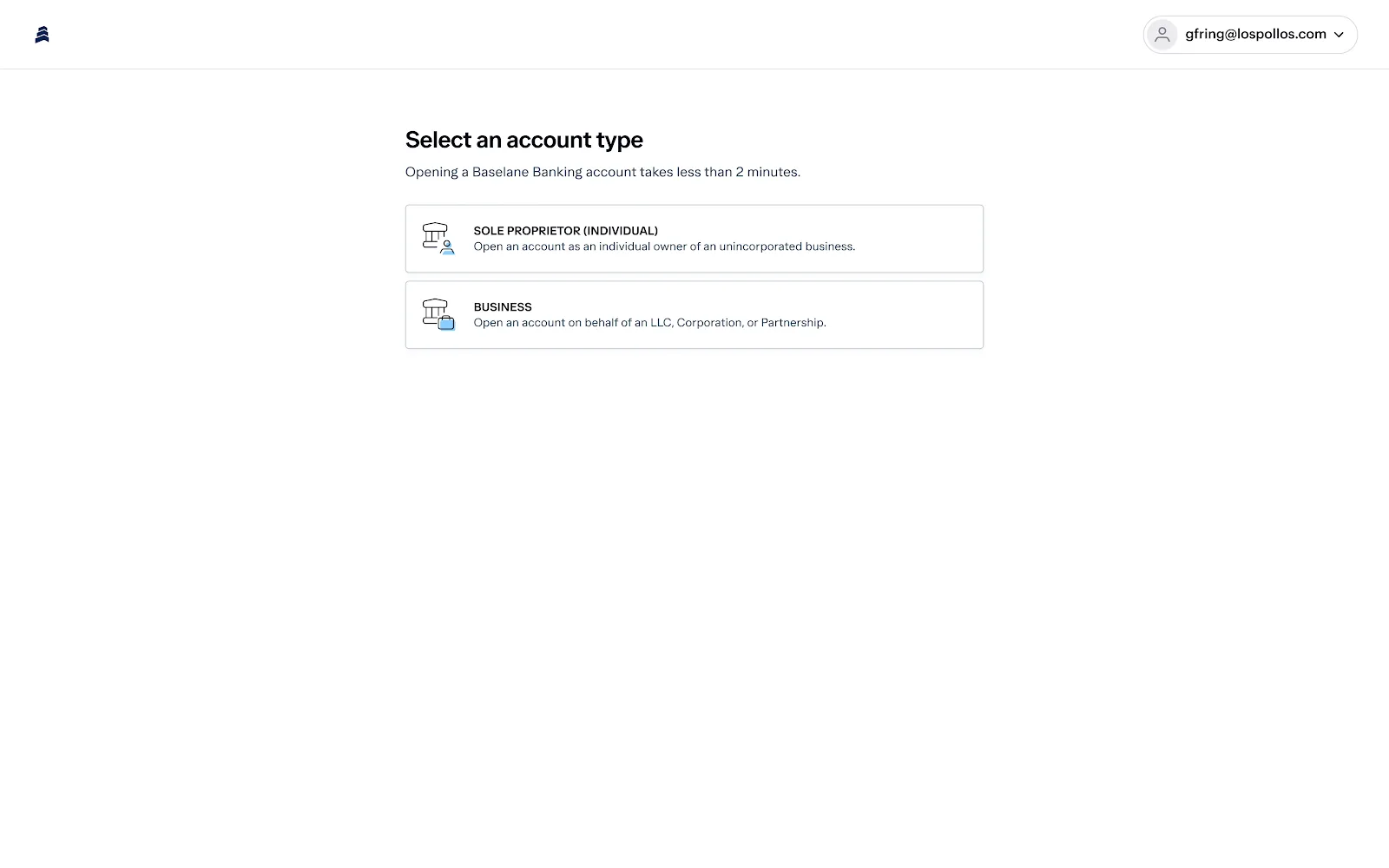
Pick the right entity, add all required information, and submit the application. Approval usually takes minutes to a few hours, depending on the validity of your documents.
Step 2: Create unlimited sub-accounts
Once your main Baselane checking account is approved, go back to the Banking section.
Manually open high-yield online savings accounts or additional checking accounts for each property, tenant, or financial category (e.g., reserves, security deposits). Here’s an example of how to structure your rentals property accounts
- Operating Account: Used for rent collection and day-to-day rental property operating expenses.
- Maintenance Reserve: Holds funds for major repairs, earning a high yield [v="apyvalue"] APY².
- Security Deposit: Holds tenant funds separately to stay legally compliant, also earning interest if in a savings account.
Each virtual account receives a unique account number, allowing direct deposits and payments per property or sub-account.
Step 3: Deposit funds and monitor the cash flow
Deposit funds into each sub-account as needed and direct all income/expense transactions to and from the relevant sub-account for precise tracking. You can also set up auto-transfer rules to ensure your accounts are always well-funded.
Regularly monitor and review transactions in each sub-account for compliance and bookkeeping purposes, including requirements such as security deposit segregation.
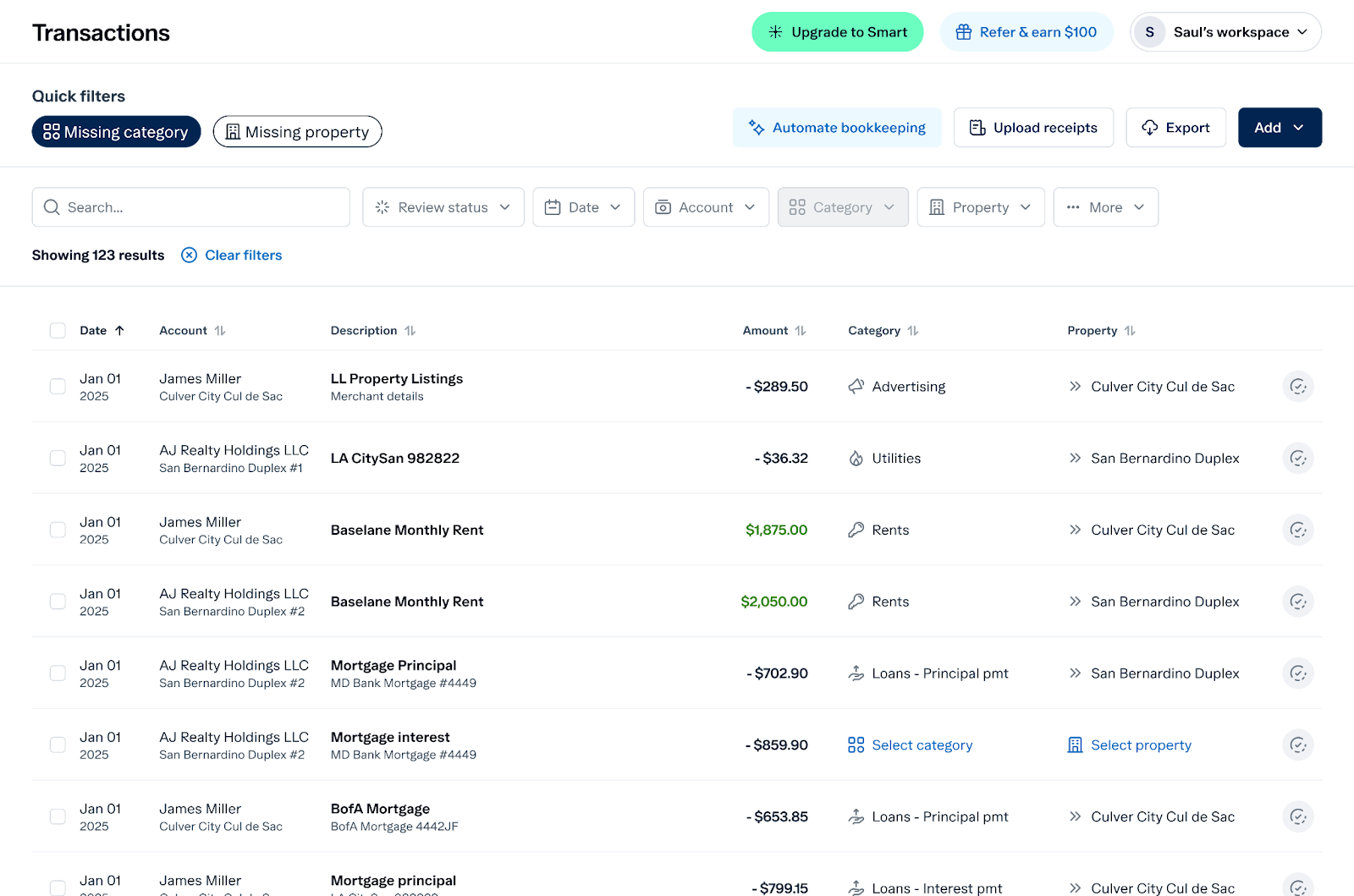
Baselane helps you scale your portfolio by offering unlimited accounts to segregate funds and maintain clear records. Get started today and see how multiple accounts can make real estate fund management easy.
FAQs
Do landlords need a separate bank account for rental property income?
Yes. While not mandatory in all states, separating your rental income and expenses into a business bank account is highly recommended. It simplifies bookkeeping, reduces audit risk, and is a key step in protecting your personal assets from business liability. Check out our guide about business vs personal bank accounts to understand the benefits in-depth.
What type of bank account should landlords open for rental property income?
Landlords should open a business checking account (or a real estate LLC account). The best accounts, like those offered by Baselane, offer the flexibility of unlimited virtual sub-accounts for property operating funds, maintenance reserves, and security deposits. Check out our guide to learn how to choose a bank and compare features and pricing of the best banks for real estate investors.
Is it better to open one business account per property or one master account?
It depends on your portfolio size and legal structure:
- One to two units: One master online business checking account with property tags often works fine for simple separation.
- Three to five units: Virtual sub-accounts are highly recommended to gain granular clarity for Schedule E tax reporting.
- Six or more units or multiple LLCs: Fully separate accounts per LLC or property are best to minimize audit complexity and support multi-entity reporting.
How does a separate bank account help during tax season?
The IRS requires landlords to report income and expenses for each property on Schedule E. Having a dedicated account (or sub-account) for each property for tracking income and expenses helps with tax prep. It provides clear transaction records for accurate landlord tax deductions.
.webp)

.jpg)


.webp)


