

South Dakota security deposit account for landlords
Easily collect and manage deposits for every property with dedicated security deposit accounts.

Why use a security deposit account in {{ state }}
Security deposit funds are instantly separated, making move-in, move-out, and returns completely clear.

Benefits for property
owners
Repair and maintenance

Covers property damage such as paint, carpet, or floor damage, including costs caused by pets.
Fund separation
Meet state requirements for holding deposits in a dedicated tenant security deposit account.
Streamlined returns
Simplifies refunding tenants while accounting for deductions like cleaning or unpaid utilities.

Benefits for tenants
Fair protection
Funds are protected from misuse, covering only actual repair costs like cleaning, carpet replacement, or floor damage.
Transparency on deductions
Tenants can clearly see allowable charges, protecting against unfair claims on normal wear and tear.
Savings potential
Deposits may be held in a tenant security deposit account or rental deposit account that earns security deposit interest, helping tenants recover more than they put in.

{{ state }} security deposit account
You are not legally required to hold funds in a specific security deposit bank account in South Dakota. However, many landlords open a separate account to hold the tenant security deposit South Dakota residents provide to avoid commingling and ensure the money is ready for a quick return and deductions when the tenant moves out.

{{ state }} security deposit
limits
The maximum security deposit South Dakota allows is equal to one month’s rent. The average security deposit falls between $1,000 to $1,200, matching the current typical monthly rent for a one- or two-bedroom home.

{{ state }} security deposit interest
State law security deposit rules don’t mandate paying interest on security deposits in South Dakota. This means you don’t have to pay a set security deposit interest rate on the funds you hold.
Go beyond standard security deposit accounts
Collect, return, and track deposits by tenant and
property, even when funds are held in external accounts.

{{ state }} security deposit accounts
Hold each security deposit in separate non-interest or interest-bearing accounts that earn up to [v="apyvalue"] APY².

Unlimited accounts for all entities
Manage deposits for all entities under one login — LLCs, corporations, partnerships, and individuals.

Free online payments
Collect rent and deposits online for free and easily return deposits via ACH, wire, or check.

Automated bookkeeping
Track and tag payments to the right tenant and property — automatically.
Essentials for every door
Everything you need for every part of the rental process.

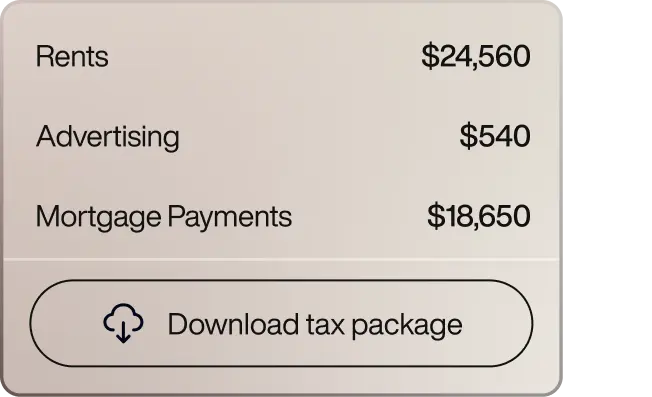
Tax preparation
Instantly generate tax packages with ledgers, receipts, and statements for every entity and property.

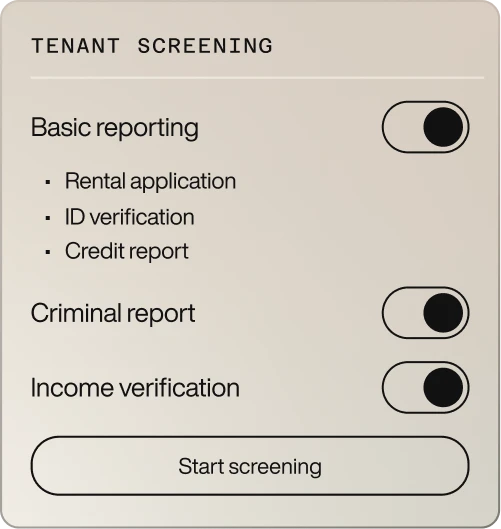
Free tenant screening
Screen tenants online for free — instantly verify credit, background, evictions, ID, and income.
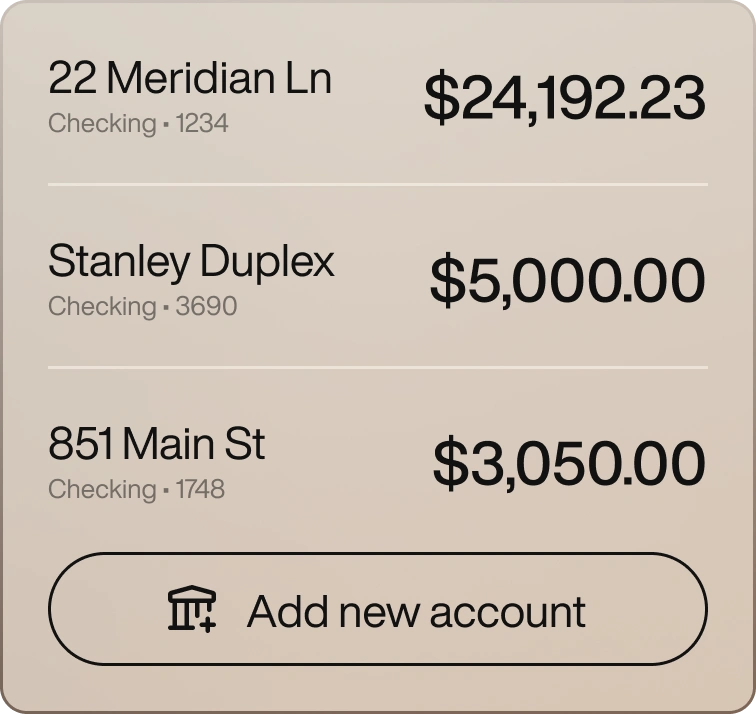

Property-specific accounts
Open unlimited checking and savings accounts to easily separate funds for all your properties with no monthly maintenance fees.
{{ state }} security deposit rules
1 month's rent
No
No escrow account required; separate account recommended
Unpaid rent or utilities, repairs, lease violations, and cleaning costs
14 days
Additional resources
ARTICLE
How to collect security deposits


FAQs
How much security deposit can a landlord charge in South Dakota?
The South Dakota security deposit limit is one month’s rent. This limit includes the total of any first and last month's rent plus additional security funds you collect at move-in.
Is interest required on tenant security deposits in South Dakota?
No, South Dakota security deposit interest there is not required, as you’re not legally mandated to keep an interest-bearing landlord-tenant security deposit bank account in South Dakota.
How should I issue a security deposit receipt to tenants in South Dakota?
While South Dakota law doesn't require you to give tenants a receipt, it’s a best practice to do so. Include the security deposit amount received, the date, and the purpose of the payment.
How many days to return a security deposit in South Dakota?
Tenant security deposit South Dakota law offers a relatively shorter return window of only 14 days. shorter. If you make any deductions, add them to a list and send it to tenants, new or last known, within the same 2-week window.
What can a landlord deduct from a security deposit in South Dakota?
Landlord rights security deposit rules allow you to use the deposit to cover any unpaid rent, cleaning, or repairs beyond normal wear and tear. If you withhold funds without a valid reason or miss the 14-day deadline, a court could award the tenant double damages. These rules apply to a house rental, apartment, condo, or any other property type.
Can a security deposit be used for unpaid rent in South Dakota?
Yes, you can pull funds from the deposit to cover any rent the tenant failed to pay before moving out. Although you’re not required to maintain a security deposit escrow account in South Dakota, it’s recommended to keep these funds separate to make such deductions easier.
Can landlords keep a security deposit for breaking a lease in South Dakota?
If a tenant is breaking lease terms early, landlord security deposit South Dakota rules allow you to cover your financial losses, provided those damages are documented and permitted by your lease agreement.


